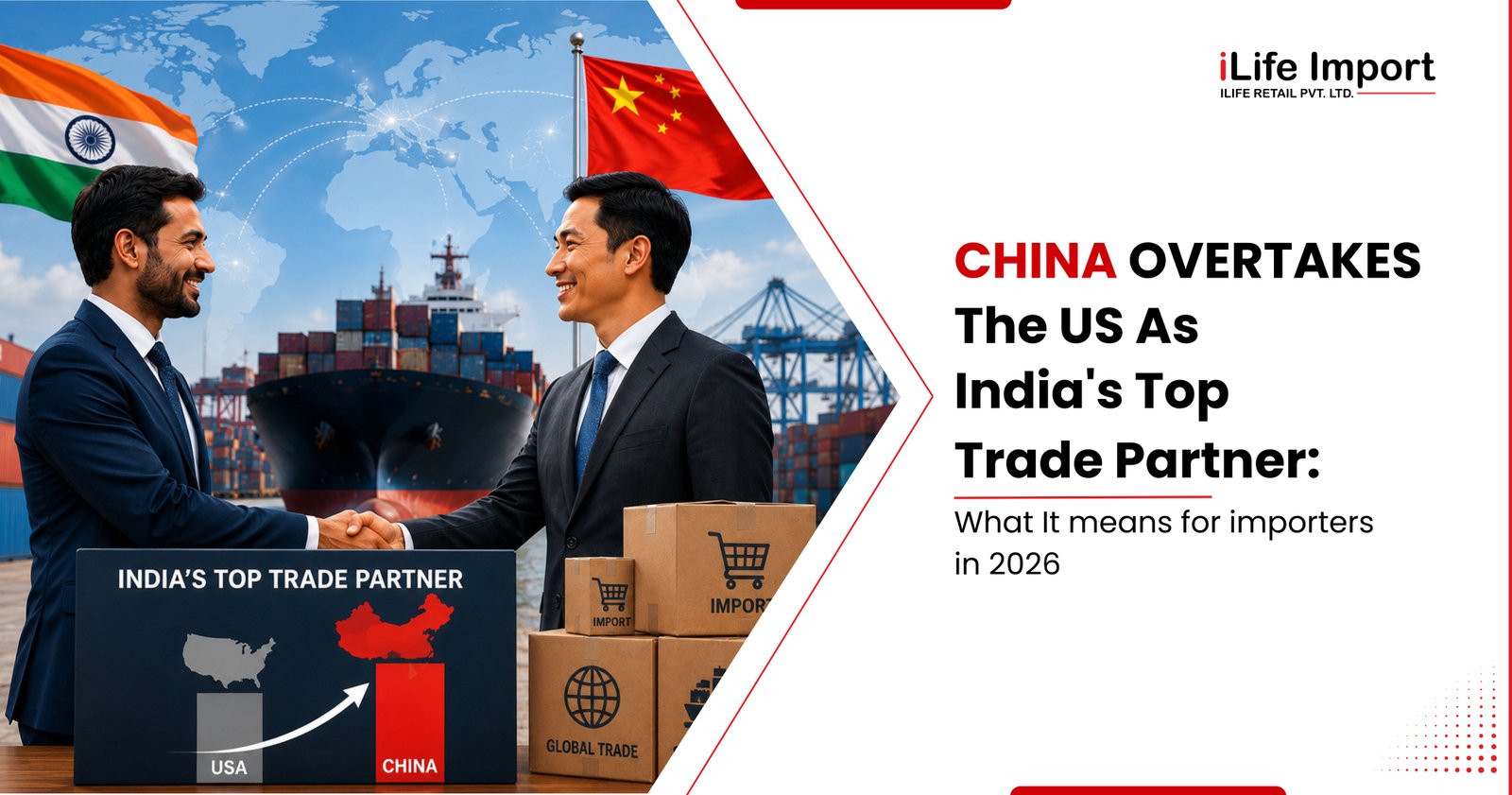
China Overtakes US as India's Top Trade Partner - What It Means for Importers
India's trade relationship with China has once again become the center of global business discussions. Despite geopolitical tensions and India's continuous efforts to diversify its sourcing ecosystem, China has reclaimed its position as India's largest trading partner.
According to recent government trade data, India–China bilateral trade reached approximately USD 151 billion in FY 2025–26, making China India's largest trading partner once again. Imports from China stood at around USD 131.6 billion, while exports to China were close to USD 19.5 billion, resulting in a significant trade gap.
Although India is actively encouraging domestic manufacturing through initiatives like Make in India and the Production Linked Incentive (PLI) Scheme, many industries still rely heavily on Chinese machinery, industrial components, electronics, chemicals, and raw materials to maintain production efficiency.
(Reference: The Economic Times)
For Indian businesses, this is more than just a trade statistic—it is a strategic business opportunity. Companies that understand the evolving trade landscape and adopt compliant, efficient sourcing strategies can gain a competitive advantage through cost optimisation, product innovation, and supply chain stability.
At iLife Import, we help businesses navigate this evolving landscape by providing reliable supplier sourcing, quality inspections, logistics support, customs guidance, and end-to-end import solutions from China
India–China Trade at a Glance (FY 2025–26)

Why Has China Become India's Largest Trading Partner Again?
Several economic and industrial factors have contributed to China's continued dominance as India's largest trading partner.
1. Unmatched Manufacturing Scale
China remains the world's largest manufacturing hub, producing a vast range of products across industries. From industrial machinery and electronics to furniture, home décor, packaging materials, and consumer goods, Chinese manufacturers offer production capabilities that few countries can currently match.
Large-scale production allows factories to maintain competitive pricing while meeting bulk orders with shorter production timelines.
2. Competitive Pricing
Chinese suppliers benefit from advanced manufacturing technologies, integrated industrial clusters, economies of scale and efficient logistics infrastructure.
For Indian importers, this translates into:
- Better quality products
- Lower procurement costs
- Better pricing negotiations
- Flexible Minimum Order Quantities (MOQs)
- Private labelling opportunities
- Faster production turnaround
- Improved profit margins
3. 1. Cost-Effective Manufacturing with an Integrated Supply Chain
China continues to be a preferred sourcing destination due to its ability to combine cost efficiency with a highly integrated manufacturing ecosystem. Unlike many countries where suppliers operate independently, China's industrial clusters bring together raw material suppliers, component manufacturers, packaging companies, logistics providers, and exporters within the same ecosystem.
This integrated approach enables manufacturers to:
- Lower production costs through economies of scale
- Reduce production lead times
- Maintain consistent product quality
- Respond quickly to changing market demands
- Support customized product development
- Ensure a faster and more reliable supply chain
For Indian businesses, this translates into competitive pricing, improved operational efficiency, and dependable sourcing for both large and small-scale imports.

3.2. Technology & Innovation: Driving the Future of Manufacturing
China has transformed from being the ‘World's Factory’ to becoming a global leader in advanced manufacturing and industrial innovation. Significant investments in automation, artificial intelligence (AI), robotics, smart factories, and research & development (R&D) have enabled Chinese manufacturers to deliver higher-quality products with greater speed and precision.
Key advantages include:
- AI-powered quality control and process optimization
- Robotics and automation for efficient, high-volume production
- Smart factories with real-time monitoring and data-driven decision-making
- Faster product innovation, prototyping, and time-to-market
- Continuous investment in advanced manufacturing technologies
- Greater consistency, precision, and global competitiveness
For Indian importers, partnering with technologically advanced Chinese manufacturers provides access to innovative products, superior manufacturing standards, and future-ready production capabilities.
Why This Trade Partnership Matters to the Indian Economy
A significant proportion of India's imports from China consists of intermediate goods-products that are used as inputs in Indian manufacturing rather than sold directly to consumers.
Industries such as electronics, renewable energy, pharmaceuticals, automotive, telecom, chemicals, textiles, engineering, and infrastructure depend on Chinese components, machinery, and industrial equipment to sustain production. For example, India's smartphone manufacturing ecosystem relies heavily on imported electronic components and semiconductor-related equipment, while pharmaceutical companies source a substantial share of Active Pharmaceutical Ingredients (APIs) from China.
This means that Chinese imports are not merely consumer products; they enable Indian businesses to manufacture finished goods, generate employment, strengthen exports, and contribute to economic growth.
Moreover, affordable imports help Indian manufacturers remain globally competitive. Access to high-quality and cost-effective machinery and raw materials reduces production costs, encourages innovation, and supports expansion into international markets.
Industry experts believe that while India is accelerating domestic manufacturing through initiatives such as the Production Linked Incentive (PLI) Scheme and Make in India, strategic imports from China will remain essential in the medium term. Many Indian industries continue to rely on imported machinery, precision components, electronics, APIs, and industrial raw materials that are not yet produced domestically at the same scale or cost efficiency. As India's manufacturing ecosystem matures, businesses are expected to adopt a balanced sourcing strategy—strengthening local production while continuing to import critical inputs that support competitiveness, innovation, and export growth.
Rather than viewing imports as a weakness, businesses increasingly recognise them as part of a diversified and resilient supply chain strategy. Successful importers focus on balancing cost efficiency, quality assurance, regulatory compliance, and supplier diversification to minimise risks while maintaining competitiveness.
Opportunities for Indian Importers
1. Access to a Wide Product Portfolio
China's extensive manufacturing ecosystem enables Indian businesses to source products across diverse industries, including furniture, home décor, industrial machinery, electronics, packaging materials, construction materials, electrical equipment, and consumer goods. This allows businesses to diversify their offerings and respond quickly to changing market demand.
2. Better Pricing Opportunities
China's economies of scale, advanced manufacturing infrastructure, and competitive supplier ecosystem allow importers to secure cost-effective products, negotiate better commercial terms, and improve overall profitability while maintaining product quality.
3. Private Labelling & OEM Manufacturing
Many Chinese manufacturers offer private labelling and OEM manufacturing services, allowing Indian businesses to build their own brands, customize products, and differentiate themselves in competitive markets without investing in manufacturing facilities
4. Product Customisation
Chinese suppliers offer flexibility in product specifications, materials, packaging, and branding, enabling businesses to tailor products to local customer preferences and market requirements.
5. Access to Advanced Manufacturing Technologies
Chinese manufacturers have invested significantly in automation, artificial intelligence (AI), robotics, smart factories, and research and development. This gives Indian importers access to technologically advanced products manufactured with greater precision, consistency, and efficiency.
6. Faster Product Innovation
Continuous investment in research, development, and advanced manufacturing enables Chinese suppliers to introduce new products and improved designs more quickly, helping Indian businesses keep pace with changing market trends.
7. Faster Production & Order Fulfilment
China's large-scale production capacity and integrated industrial clusters support shorter production lead times and faster turnaround for repeat orders, enabling businesses to replenish inventory efficiently and meet customer demand.
8. Expansion into High-Growth Industries
Indian businesses can capitalize on opportunities across sectors such as electronics, industrial machinery, furniture, construction, packaging, home décor, retail, and e-commerce by leveraging China's diverse manufacturing capabilities.
9. Improved Global Competitiveness
Access to cost-effective machinery, industrial components, and raw materials enables Indian businesses to reduce production costs, improve product quality, encourage innovation, and strengthen their competitiveness in domestic and international markets.
10. Business Growth Through Strategic Sourcing
Businesses that adopt efficient sourcing strategies can achieve cost optimisation, improve product quality, support innovation, and build long-term growth in an increasingly competitive global marketplace.
Better Pricing Opportunities
One of the biggest advantages of importing from China is the competitive pricing it offers. China's vast manufacturing network creates healthy competition among suppliers, enabling Indian businesses to negotiate better commercial terms.
Importers can often benefit from:
- Competitive product pricing
- Lower Minimum Order Quantities (MOQs)
- Private labelling and OEM manufacturing
- Product customisation
- Flexible payment terms
- Faster turnaround for repeat orders
However, price should never be the sole deciding factor. The lowest quotation does not always represent the best value. Businesses should evaluate supplier reliability, product quality, certifications, production capacity, and after-sales support before finalising orders.
Regulatory Compliance Remains Critical
India has significantly strengthened its import regulations in recent years to improve product quality, consumer safety, and manufacturing standards.
Before importing products from China, businesses should verify compliance with:
- Product testing requirements
- Quality Control Orders (QCOs)
- BIS Certification (where applicable)
- Country-of-origin declarations
- Other applicable import licenses and sector-specific regulations
Failure to comply with these requirements may result in shipment delays, customs detention, financial penalties, or even rejection of imported goods.
Partnering with an experienced sourcing company can help businesses navigate these regulatory requirements efficiently.
Supply Chain Resilience: Building a Smarter Import Strategy

In today's global trade environment, a resilient supply chain is essential for businesses importing products from China and other international markets. Disruptions caused by the COVID-19 pandemic, geopolitical tensions, rising freight costs, and port congestion have demonstrated that successful importing depends on more than just finding the lowest-priced supplier.
A well-planned supply chain helps businesses maintain product quality, reduce delays, control costs, and ensure uninterrupted deliveries.
Key Strategies for a Resilient Supply Chain
1. Partner with Verified Manufacturers
Conduct thorough supplier verification before placing an order. Working with audited and reliable manufacturers reduces the risk of quality issues, production delays, and fraud.
2. Schedule Independent Quality Inspections
Quality inspections at different production stages help identify defects before shipment, minimizing costly rework, returns, and customer complaints.
3. Plan Production & Inventory Early
Advance production planning and inventory forecasting help businesses avoid seasonal delays, factory shutdowns, and stock shortages.
4. Monitor Freight & Logistics Performance
Track freight rates, shipping schedules, and transit times to optimize transportation costs and minimize unexpected delays.
5. Ensure Customs & Regulatory Compliance
Stay updated with import regulations, product certifications, customs documentation, and country-specific compliance requirements to avoid shipment holds, penalties, and clearance delays.
Why Supply Chain Resilience Matters
A resilient supply chain enables businesses to respond quickly to disruptions while maintaining product quality and customer satisfaction. By combining supplier verification, independent quality inspections, proactive logistics planning, and regulatory compliance, importers can reduce operational risks and build a more reliable sourcing strategy.
At every stage-from Order Placement to Customs Clearance and Final Delivery-effective planning and quality control play a crucial role in ensuring smooth international trade operations and long-term business success.
Import Quality Products with Confidence
A successful import business is built on consistent product quality. While competitive pricing is important, Chinese manufacturers ensure that global quality standards are met with best-in-class machinery and raw materials used for production. Before placing bulk orders, businesses should:
- Request product samples.
- Conduct supplier due diligence.
- Verify factory certifications.
- Perform third-party quality inspections.
- Define detailed product specifications.
- Confirm packaging and labelling requirements before production begins.
Investing in quality assurance helps reduce returns, customer complaints, and unexpected costs.
Industries That Stand to Benefit the Most
China's extensive manufacturing capabilities support businesses across multiple industries.
|
Industry
|
Import Opportunities
|
|
Furniture
|
Home, office and modular furniture
|
|
Electronics
|
Components, accessories, appliances
|
|
Industrial Machinery
|
CNC machines, packaging equipment, manufacturing tools
|
|
Home Décor
|
Decorative lighting, hardware, furnishings
|
|
Construction
|
Building materials, tools and fittings
|
|
Retail & E-commerce
|
Consumer goods, seasonal inventory and lifestyle products
|
|
Packaging
|
Industrial and retail packaging solutions
|

Smart Import Strategies for 2026
As international trade becomes increasingly competitive, businesses should move beyond transactional purchasing and adopt long-term sourcing strategies.
Choose Verified Manufacturers
Work only with suppliers who have proven export experience, relevant certifications, and positive international buyer references.
Understand the Total Landed Cost
Many importers focus only on product prices while overlooking additional expenses.
Calculate:
- Product Cost
- Freight Charges
- Customs Duty
- GST
- Insurance
- Inland Transportation
- Documentation Costs
- Warehousing Expenses
A complete landed cost analysis provides a more accurate picture of profitability.
Build Long-Term Supplier Relationships
Reliable supplier partnerships often result in:
- Better pricing
- Priority production
- Faster delivery
- Consistent quality
- Improved payment flexibility
Long-term relationships also create greater supply chain stability during periods of market uncertainty.
Why Businesses Choose iLife Import
International sourcing involves much more than identifying a supplier. Successful importing requires supplier verification, quality control, logistics planning, regulatory compliance, customs clearance, and risk management.
At iLife Import, we simplify every stage of the import journey by providing:
- Verified supplier sourcing
- Product quality inspections
- Freight forwarding support
- Customs documentation assistance
- Import compliance guidance
- End-to-end sourcing solutions from China
Our experienced team works closely with businesses to minimise risks, improve sourcing efficiency, and help clients build sustainable import operations.
Conclusion
China's return as India's largest trading partner reflects its continued importance in the global manufacturing ecosystem. While India is making significant progress in strengthening domestic manufacturing, Chinese suppliers continue to provide critical machinery, industrial components, electronics, and raw materials that support Indian industries.
For importers, the opportunity extends far beyond cost savings. Businesses that prioritise quality assurance, supplier verification, regulatory compliance, and strategic sourcing can improve profitability while building resilient supply chains.
With expert guidance from iLife Import, businesses can confidently navigate international trade, reduce sourcing risks, and unlock long-term growth opportunities in an increasingly competitive global market.
Frequently Asked Questions
1. Why has China become India's largest trading partner again?
China offers large-scale manufacturing, competitive pricing, diverse product categories, and reliable supply chains, making it a preferred sourcing destination for Indian businesses.
2. Is importing from China still profitable in 2026?
Yes. With proper supplier selection, compliance, and logistics planning, importing from China continues to offer strong profit potential.
3. What products does India import most from China?
Popular imports include electronics, industrial machinery, furniture, electrical equipment, chemicals, automotive components, and consumer goods.
4. What should importers verify before placing an order?
Importers should verify supplier credentials, product quality, certifications, shipping terms, and applicable BIS or customs requirements.
5. How can iLife Import help?
iLife Import assists businesses with supplier sourcing, quality inspections, import documentation, logistics coordination, and customs support to ensure a smooth importing experience.