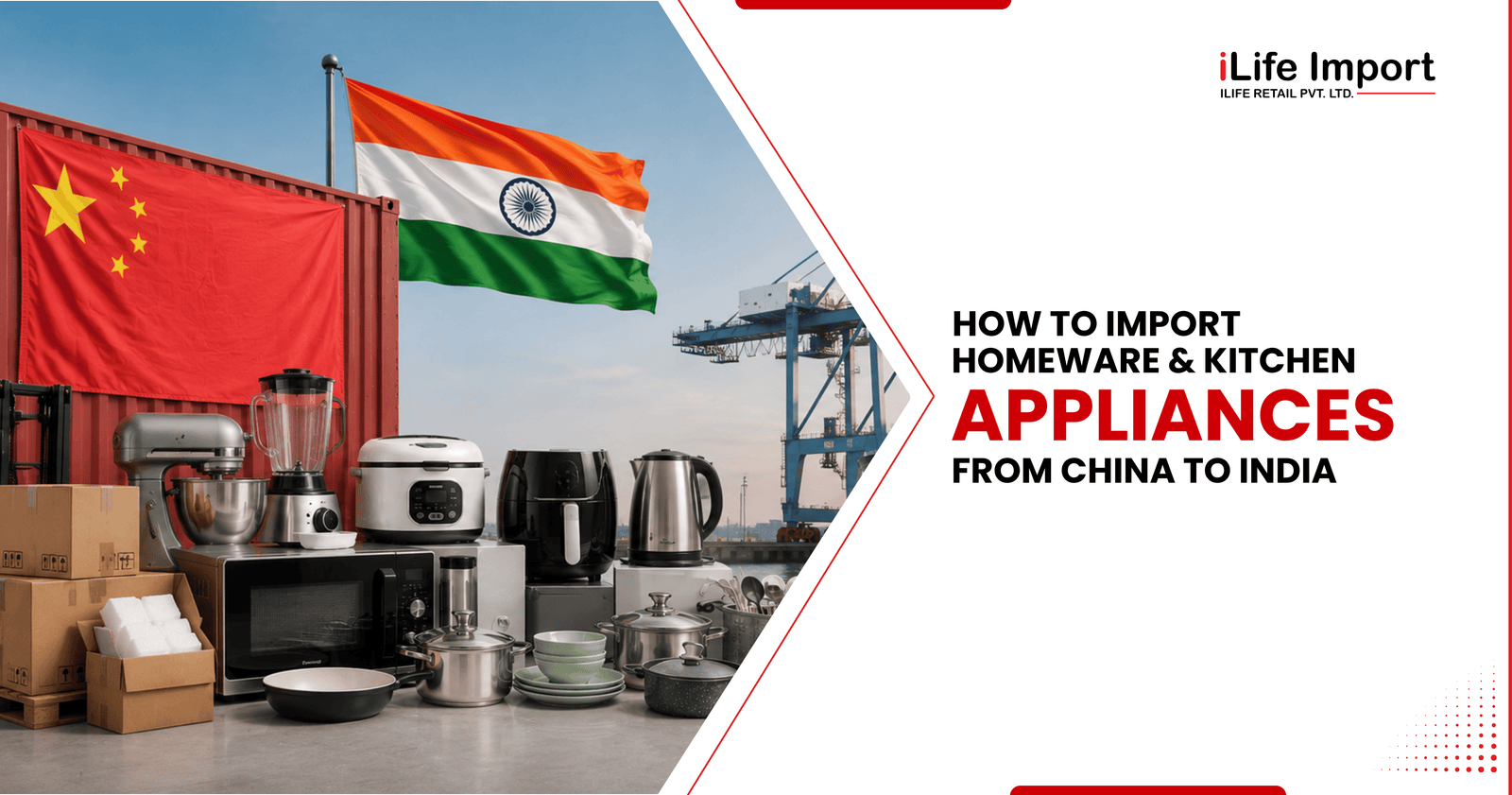
Importing homeware from China to India can be a profitable opportunity for businesses looking to access a wide range of products at competitive manufacturing prices. China has a large and established manufacturing industry producing everything from cookware and kitchen storage products to electric kettles, mixers, air fryers and other kitchen appliances.
However, successful China to India homeware import requires more than finding a supplier and placing an order. Businesses need to understand supplier verification, product quality, import documentation, customs requirements, shipping, taxes and applicable compliance standards.
This guide explains how to import homeware and kitchen appliances from China to India and the key factors businesses should consider before starting.
1. Analyse the Indian Furniture Market Before You Import
Before importing, identify products that have strong demand in your target market. Homeware and kitchen products can include cookware, utensils, storage containers, organizers, dinnerware, electric kettles, blenders, air fryers and other appliances.
Research competitors, selling prices, customer preferences and expected profit margins. A product may be inexpensive in China but become less competitive after adding freight, customs duties, taxes and other expenses.
Understanding your target customer before ordering can help you choose products with better commercial potential.
2. Find Reliable Homeware Suppliers in China
Finding the right supplier is one of the most important parts of the import process. Businesses can source products through B2B marketplaces, trade fairs, sourcing companies and direct manufacturer relationships. China’s key furniture and homeware manufacturing hubs include Foshan, Dongguan, Guangzhou, Shenzhen, Hangzhou and Ningbo, with each city specialising in different product categories and manufacturing capabilities.
Do not select a supplier solely because they offer the lowest price. Compare suppliers based on product quality, manufacturing capacity, minimum order quantity, certifications, production timelines, payment terms and export experience.
Ask potential suppliers for product catalogues, specifications, photographs, videos and samples before committing to a large order. If you are unsure which Chinese city, supplier or sourcing channel is best suited to your requirements, contact us at iLife Import for guidance on furniture and homeware sourcing from China.
3. Verify the Supplier Before Ordering
Before placing a large order, take time to verify the supplier’s business credentials, manufacturing capabilities and product quality. Do not rely solely on online profiles, catalogues or photographs. Request company details, factory information, product samples, certifications and references from previous customers where possible.
If you are sourcing from China, consider arranging a physical factory or site visit before finalising your supplier. Visiting multiple vendors allows you to compare manufacturing facilities, workmanship, materials, finishing standards, production capacity and quality-control processes. It can also help you identify whether you are dealing directly with a manufacturer or a trading company.
A site visit or independent factory inspection can provide greater confidence that the supplier can consistently meet your required specifications before you commit to a substantial order.
4. Order Samples Before Bulk Production
One of the safest ways to evaluate a product is to order samples before placing a bulk order.
Check the sample for material quality, finishing, dimensions, durability, packaging and functionality. For electrical kitchen appliances, pay particular attention to voltage, plug type, power consumption, safety features and operating instructions.
If the product is intended for sale in India, confirm the applicable Indian standards and regulatory requirements before placing a commercial order.
5. Understand Import and Compliance Requirements
Before importing products, identify the appropriate HS code and check the applicable customs duties, taxes and regulatory requirements.
Some electrical and electronic products may be subject to additional Indian compliance requirements. Product labels, packaging, manuals and other information may also need to meet applicable regulations.
Importers should verify current requirements for their specific products before shipment because regulations can vary according to product category.
6. Calculate the Complete Landed Cost
The supplier’s quoted price is not the final cost of importing a product into India.
When calculating your China to India import cost, consider:
- Product purchase price
- Packaging
- Transportation within China
- International shipping
- Insurance, where applicable
- Customs duties
- Applicable taxes
- Port and handling charges
- Customs clearance
- Inspection costs
- Transportation within India
- Warehousing and storage
Calculating the complete landed cost allows you to determine the actual profit margin before ordering.
7. Select the Right Shipping Method
Shipping is another important consideration when importing kitchen appliances and homeware from China.
Sea freight is generally suitable for larger commercial shipments because it can be more economical for substantial volumes. Air freight may be suitable for samples, smaller shipments or urgent deliveries, although it is generally more expensive.
An experienced freight forwarder can help coordinate transportation, documentation and customs clearance.
8. Conduct Quality Inspection
Quality control should continue throughout the purchasing process, rather than only after the furniture reaches India. For larger or high-value orders, consider arranging quality inspections at different stages of production, including a pre-shipment inspection before the goods leave China.
Where possible, inspect or have an independent inspection company check product quantity, dimensions, materials, workmanship, finishes, functionality and packaging against the agreed specifications. For customised furniture, also verify colours, hardware, measurements and other agreed design details.
For larger orders, consider inspecting multiple production batches or a representative sample of products, rather than relying on a single item for quality assessment. Identifying defects or inconsistencies before shipment gives you an opportunity to have them corrected at the factory and can save significant time, replacement costs and shipping expenses compared with discovering problems after the goods arrive in India.
9. Start Small and Scale Your Imports
If you are importing a particular product for the first time, consider starting with a smaller order.
This allows you to evaluate the supplier, product quality, shipping process, customer response and actual landed cost. Once the product and supplier have been tested successfully, you can increase your order volume.
Over time, consistent order volumes may also help you negotiate better prices and payment terms with suppliers.
Order samples, provide detailed product specifications, verify your supplier and consider pre-shipment quality inspection before the goods leave China.
Conclusion
Importing homeware and kitchen appliances from China to India can provide businesses with access to a broad range of products and manufacturing capabilities. However, successful importing requires careful planning at every stage.
From choosing reliable homeware suppliers in China to calculating landed costs, checking compliance requirements, selecting the right shipping method and conducting quality inspections, every step can affect your final profitability.
By building a structured sourcing and import process, Indian businesses can reduce unnecessary risks and create a more reliable China-to-India supply chain.
Frequently Asked Questions
1. Is it profitable to import homeware from China to India?
It can be profitable when the product has sufficient demand and the importer carefully manages product cost, shipping, customs, compliance and selling expenses. Profitability depends on the specific product and market.
2. How can I find kitchen appliance suppliers in China?
You can find suppliers through B2B marketplaces, trade fairs, sourcing companies and direct manufacturer networks. Always verify suppliers and request samples before placing a large order.
3. What documents are required to import products from China to India?
The exact documentation depends on the product and shipment. Common commercial documents can include an invoice, packing list and transport documents, along with any applicable import, certification or compliance documentation.
4. Do kitchen appliances require certification in India?
Some electrical and electronic products may be subject to mandatory Indian standards or certification requirements. Importers should check the current requirements applicable to their specific product before importing.
5. Is sea freight or air freight better for importing from China?
Sea freight is generally more suitable for larger shipments where cost efficiency is important. Air freight can be useful for samples, smaller shipments or urgent orders.
6. What Kitchen Products Can You Source from China?
China offers a wide range of kitchen products for businesses, retailers, hospitality projects and homeware brands. Depending on your requirements, you can source products across categories such as:
Kitchen Appliances:
Slow juicers, nut milk makers, air fryers, blenders, electric kettles, rice cookers, coffee machines, food processors, hand mixers, sandwich makers, toasters, electric choppers and more.
Kitchenware & Tableware:
Spatulas, ladles, tongs, chopping boards, plates, bowls, spoons, forks, knives, serving trays, storage containers, cookware, glassware, cutlery, fancy tableware, serveware and more.
The right products will depend on your target market, budget, required specifications and order volume. Contact iLife Import to discuss your sourcing requirements and explore suitable products and suppliers from China.