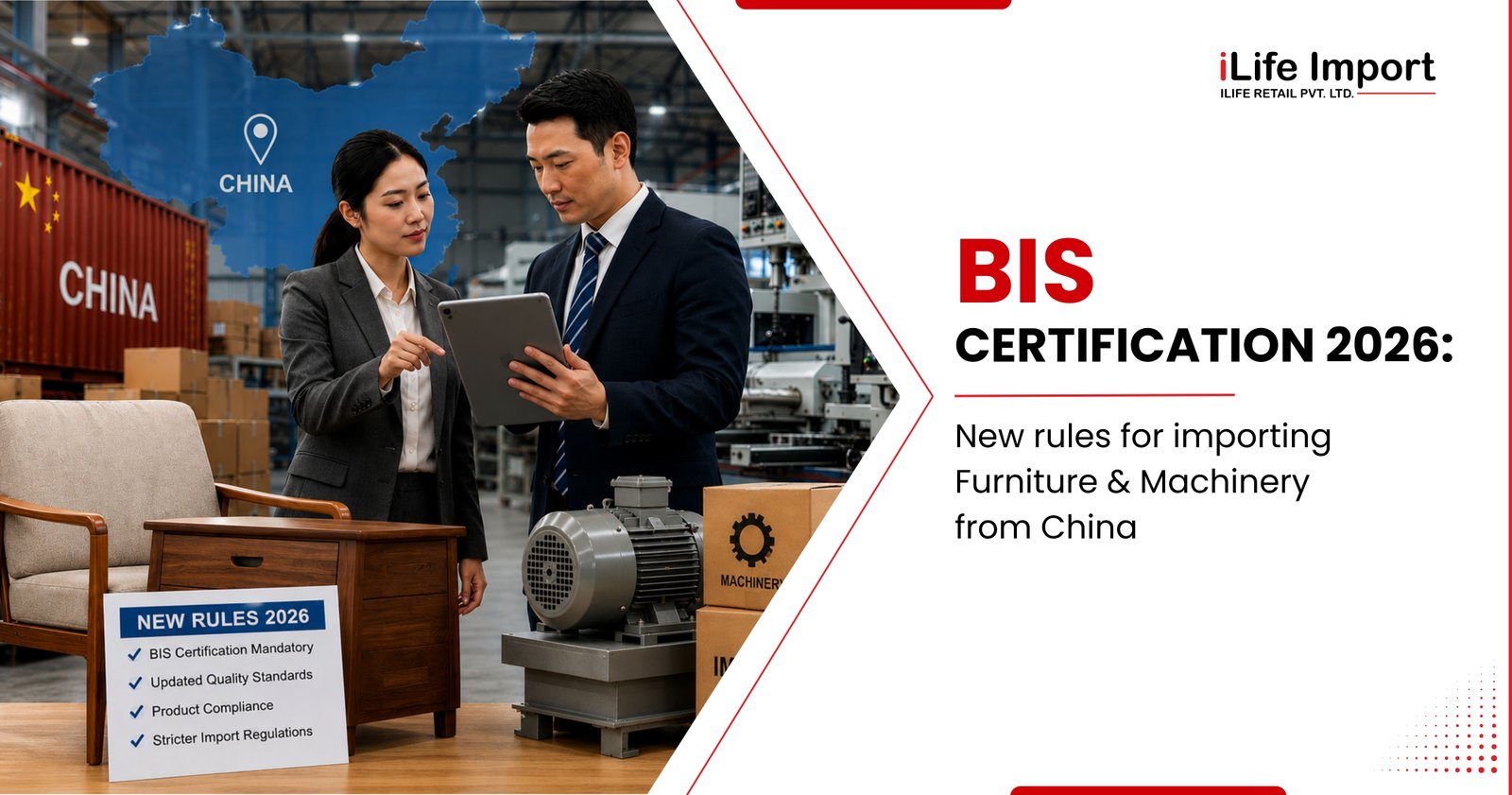
India's Evolving Import Landscape: Why BIS Compliance Matters More Than Ever
India's trade relationship with China continues to play a vital role in supporting industries such as manufacturing, infrastructure, education, healthcare, hospitality, and retail. From modular office furniture and institutional seating to industrial machinery, packaging equipment, and production systems, Chinese manufacturers remain a preferred sourcing partner for Indian businesses due to their manufacturing capabilities and competitive pricing.
However, as import volumes continue to grow, India's regulatory approach has also evolved. The government's focus is no longer limited to facilitating imports—it is increasingly centred on ensuring that every regulated product entering the Indian market complies with prescribed quality, safety, and performance standards. This shift has made compliance an essential part of the import process rather than a requirement addressed only during customs clearance.
In 2026, this regulatory framework has become even more stringent with the continued implementation and expansion of Quality Control Orders (QCOs) under the Bureau of Indian Standards (BIS) framework. These measures aim to strengthen quality assurance, improve consumer safety, and ensure that imported products compete on the same quality benchmarks as domestically manufactured goods.
For businesses importing furniture and machinery from China, BIS compliance is no longer simply a legal requirement—it is now a critical component of procurement planning, supplier selection, customs clearance, and supply chain risk management. Failure to meet applicable regulations can result in shipment delays, additional inspections, customs detention, financial losses, or rejection of consignments at Indian ports.
Understanding these regulatory developments before placing an order has therefore become essential for importers seeking uninterrupted business operations and long-term compliance.
Why India Introduced Stricter BIS Rules in 2026
India's strengthened regulatory approach reflects a broader commitment to building a quality-driven import ecosystem. The expansion of Quality Control Orders in 2026 supports several national objectives. These include improving consumer safety, reducing the circulation of substandard products, creating fair competition between domestic and imported goods, and encouraging manufacturers worldwide to adopt internationally accepted quality practices.
Another important objective is supporting flagship initiatives such as Make in India and Atmanirbhar Bharat. By enforcing uniform quality requirements for both imported and domestically manufactured products, the government seeks to create a level playing field while promoting higher manufacturing standards across industries.
For importers, this means that compliance can no longer be treated as a post-procurement activity. Businesses must now evaluate regulatory requirements during supplier selection, product specification reviews, and contract negotiations to minimise compliance risks before shipments are dispatched.
What's New Under BIS Certification Rules in 2026?
Several important regulatory developments introduced or reinforced in 2026 have significantly changed the way businesses import furniture and machinery from China.
Expansion of Quality Control Orders (QCOs)
The Government of India continues to expand the scope of mandatory Quality Control Orders across multiple industries. As additional product categories are notified, importers must verify whether their products fall under an applicable QCO before procurement. Importing regulated products without the required compliance may lead to customs detention or rejection.
Wider Coverage for Furniture Products
The Furniture (Quality Control) Second Amendment Order, 2026 remains one of the most significant developments for furniture importers. While the amendment introduced a one-time 180-day transitional provision for eligible consignments already in transit before the revised order came into effect, it also reaffirmed the government's long-term commitment to mandatory compliance for regulated furniture products.
Importers sourcing furniture from China should therefore review whether their products fall within the notified categories before finalising purchase orders.
Increased Documentation Verification
Compliance requirements now extend beyond obtaining certification. Customs authorities are placing greater emphasis on verifying technical documentation, product specifications, BIS licence details, manufacturer credentials, and supporting compliance records during customs clearance. Even minor inconsistencies may result in additional inspections or requests for clarification.
Compliance Begins Before Procurement
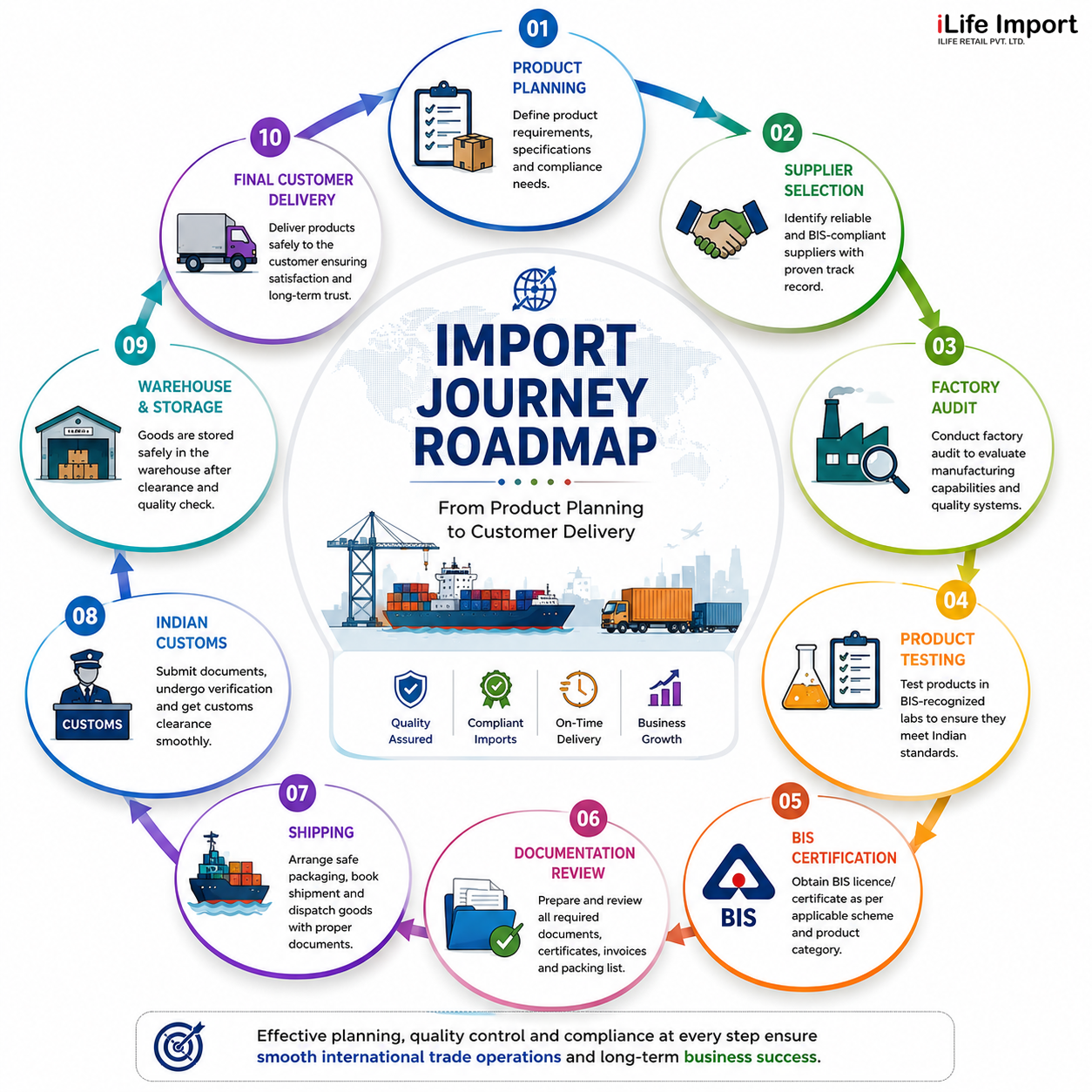
Perhaps the biggest shift in 2026 is that regulatory compliance now starts at the sourcing stage rather than at the port of entry. Businesses are expected to verify applicable Indian Standards, confirm supplier compliance, and review regulatory requirements before production begins. Integrating compliance into procurement planning helps minimise delays, avoid unexpected costs, and ensure smoother customs clearance.
Furniture Imports: Key BIS Compliance Requirements for 2026
Furniture remains one of the fastest-growing import categories from China, driven by rising demand from commercial offices, educational institutions, healthcare facilities, hospitality projects, and residential developments. While Chinese manufacturers continue to offer competitive pricing and extensive product variety, importers must now ensure that the products they source comply with the latest Quality Control Orders (QCOs) and applicable Indian Standards.
Under the current regulatory framework, several categories of furniture are covered by mandatory quality requirements.
These include:
- General Purpose Chairs and Stools
- Work Chairs
- Tables and Desks
- Storage Furniture
- Beds
- Bunk Beds
Each category is linked to a specific Indian Standard (IS), and businesses should verify whether the furniture they intend to import falls within the notified scope before confirming purchase orders.
However, compliance goes beyond identifying the applicable standards. Importers should also ensure that overseas manufacturers possess the necessary BIS approvals wherever applicable and can provide complete technical documentation to support product conformity.
Before dispatching a shipment from China, businesses should verify:
- Product specifications match the applicable Indian Standard.
- The manufacturer holds the required BIS certification, where mandated.
- Product test reports and technical documentation are complete.
- Product labels, markings, and packaging comply with regulatory requirements.
- Supporting documents accurately reflect the imported product specifications.
Conducting supplier verification at the sourcing stage significantly reduces compliance risks. Businesses that wait until customs clearance to identify regulatory gaps often face shipment delays, additional inspections, and increased logistics costs.
Another important consideration is regulatory monitoring. As Quality Control Orders continue to expand across product categories, importers should regularly review notifications issued by the Government of India and BIS to determine whether newly introduced requirements affect their product portfolio.
A proactive compliance strategy enables businesses to maintain uninterrupted supply chains while strengthening customer confidence through quality-assured products.
Machinery Imports: Preparing for a More Regulated Environment
India's industrial growth continues to increase demand for imported machinery across sectors such as manufacturing, food processing, pharmaceuticals, construction, logistics, engineering, textiles, and packaging. While China remains one of the largest suppliers of industrial equipment, the regulatory environment governing machinery imports is becoming increasingly structured.
Unlike furniture, machinery compliance depends on the specific product category and the applicable Quality Control Orders issued by the relevant ministries. As additional industrial products are brought under mandatory quality regulations, importers can no longer assume that machinery imports are exempt from BIS-related requirements.
Before importing machinery, businesses should determine:
- Whether the product falls under an existing or newly notified Quality Control Order.
- Which Indian Standard applies to the equipment.
- Whether certification or registration requirements are applicable.
- What technical documentation is required for customs clearance.
Apart from certification, customs authorities increasingly review supporting documents such as:
- Product specifications
- Installation manuals
- Safety instructions
- Manufacturer declarations
- Product catalogues
- Compliance certificates
- Technical drawings where applicable
Incomplete or inconsistent documentation can lead to additional scrutiny, shipment detention, or requests for clarification during customs clearance.
Importers should also evaluate overseas manufacturers based on their experience in exporting to India. Suppliers familiar with Indian compliance requirements are generally better equipped to provide accurate documentation and meet regulatory expectations.
Integrating compliance into procurement planning helps organisations minimise project delays, reduce unforeseen costs, and ensure smoother execution of industrial projects.
Common Compliance Mistakes Importers Should Avoid
Despite increasing awareness of BIS regulations, many businesses continue to encounter avoidable compliance challenges due to inadequate planning.
Some of the most common mistakes include:
Procuring Products Before Checking Applicable QCOs
Businesses often finalise purchase orders without verifying whether the product falls under a mandatory Quality Control Order. This can result in shipments reaching India without the necessary compliance documentation.
Assuming Every Supplier Is BIS Compliant
Not every overseas manufacturer possesses the required approvals. Importers should independently verify compliance credentials rather than relying solely on supplier assurances.
Incomplete Documentation
Technical specifications, product descriptions, BIS licence information, and supporting documents should remain consistent throughout the procurement and shipping process. Even small discrepancies may trigger customs queries.
Ignoring Regulatory Updates
Quality Control Orders continue to evolve. Businesses relying on outdated compliance information may unknowingly import products that have recently become subject to mandatory requirements.
Treating Compliance as a Customs Formality
One of the biggest mistakes is considering BIS compliance only after production has been completed. In reality, regulatory planning should begin during supplier selection and product specification discussions.
Businesses that adopt a proactive compliance approach are better positioned to avoid delays, minimise regulatory risks, and maintain efficient import operations.
Why is BIS Certification Important?
The Bureau of Indian Standards (BIS) is India's national standards body responsible for ensuring that products sold in the Indian market meet prescribed quality, safety, and performance requirements. For businesses importing furniture and machinery from China, BIS certification is not merely a regulatory formality—it is essential for achieving smooth customs clearance, maintaining legal compliance, and ensuring product reliability.
As India's Quality Control Orders (QCOs) continue to expand across product categories, businesses that fail to meet applicable BIS requirements may face shipment delays, customs detention, penalties, or restrictions on selling regulated products in India. A compliance-first sourcing strategy also strengthens customer confidence, protects brand reputation, and supports long-term business growth.
Existing BIS Compliance Framework
Under the earlier BIS framework, importers primarily focused on meeting compliance requirements before or during customs clearance. The process generally involved:
- Verifying whether a product was covered under a notified Quality Control Order (QCO).
- Ensuring that regulated products complied with the applicable Indian Standard (IS).
- Procuring products from manufacturers holding valid BIS certification, where mandatory.
- Maintaining technical documents and compliance records to support customs verification.
- Completing product testing and certification before regulated goods entered the Indian market.
While these requirements were mandatory, many businesses treated compliance as a separate regulatory activity rather than integrating it into procurement and supplier selection.
What's New Under BIS Guidelines in 2026?
The 2026 BIS updates strengthen India's quality assurance framework by making compliance more structured, transparent, and proactive
1. Stronger Compliance from the Procurement Stage
The updated approach encourages businesses to assess BIS applicability during supplier selection and procurement planning rather than waiting until shipment or customs clearance. This helps minimise compliance risks early in the sourcing process.
2. Expansion of Mandatory Quality Control Orders (QCOs)
India continues expanding mandatory certification requirements across additional product categories. In 2026, implementation timelines and mandatory BIS/ISI requirements were reinforced for several sectors, including furniture and selected industrial and electrical products, making early compliance planning increasingly important.
3. Enhanced Digital Monitoring and Documentation
The revised Grant of Licence (GoL) guidelines introduce stricter documentation requirements, improved digital tracking, and clearer procedural controls throughout the licensing process. Authorities now place greater emphasis on complete technical documentation, accurate records, and timely compliance throughout the application lifecycle.
4. Revised Grant of Licence (GoL) Procedures
The updated GoL framework introduces more structured fee payment provisions, clearer testing options, refined processing procedures, and defined timelines for licence validity, renewal, suspension, and cancellation. These changes improve transparency while strengthening regulatory oversight.
5. Greater Focus on Ongoing Compliance
The 2026 framework places greater emphasis on continuous compliance after certification. Businesses are expected to monitor regulatory updates, maintain accurate production and compliance records, and ensure products continue meeting applicable Indian Standards throughout the licence period.
Existing Framework vs. 2026 BIS Guidelines
What This Means for Importers
The 2026 BIS updates represent a shift from reactive compliance to proactive compliance management. Importers should evaluate regulatory requirements before placing orders, work with manufacturers familiar with Indian standards, maintain complete technical documentation, and regularly monitor updates to applicable Quality Control Orders.
Businesses that integrate compliance into their sourcing strategy are better positioned to reduce regulatory risks, avoid shipment delays, improve procurement efficiency, and build resilient, future-ready supply chains in an increasingly quality-focused import environment.
This version is much closer to what your reviewer requested because it is based on the referenced 2026 guidance while avoiding unsupported claims.
|
Existing Framework
|
2026 BIS Guidelines
|
|
Compliance was often treated as a customs-stage requirement.
|
Compliance is expected to begin during supplier selection and procurement planning.
|
|
Documentation requirements were comparatively less structured.
|
Greater emphasis on digital documentation, procedural controls, and technical records.
|
|
Limited guidance on testing arrangements.
|
More structured testing options, including recognised external testing arrangements in specified cases.
|
|
Fewer product categories were covered by mandatory QCOs.
|
Continued expansion of mandatory Quality Control Orders across additional sectors.
|
|
Licensing procedures were comparatively less detailed.
|
More structured Grant of Licence (GoL) process with clearer fee, renewal, suspension, and compliance provisions.
|
|
Compliance focused mainly on obtaining certification.
|
Greater emphasis on continuous compliance, monitoring, and ongoing regulatory oversight.
|
Conclusion
The BIS Certification framework in 2026 reflects India's continued commitment to improving product quality, consumer safety, and regulatory transparency. For businesses importing furniture and machinery from China, understanding these evolving requirements is essential for maintaining uninterrupted trade and avoiding costly compliance issues.
From verifying applicable Quality Control Orders and Indian Standards to reviewing supplier credentials and technical documentation, successful importers are those that integrate compliance into the sourcing process from the outset.
As regulations continue to evolve, businesses that stay informed and adopt proactive compliance practices will not only reduce regulatory risks but also build stronger, more reliable, and future-ready supply chains in an increasingly quality-focused marketplace.
Frequently Asked Questions
1. What is the purpose of BIS Certification for imported products?
BIS Certification helps ensure that regulated products imported into India meet prescribed standards for quality, safety, and performance before they are sold in the Indian market.
2. Are all furniture products imported from China covered under BIS regulations?
No. Only furniture categories notified under applicable Quality Control Orders are subject to mandatory compliance. Importers should verify the latest notifications before procurement.
3. Does all imported machinery require BIS Certification?
Not necessarily. Compliance depends on the product category and whether it falls under an applicable Quality Control Order or other mandatory regulatory requirement.
4. What happens if regulated products are imported without the required compliance?
Depending on the applicable regulations, shipments may be detained, subjected to additional inspections, delayed during customs clearance, or rejected if mandatory requirements are not met.
5. When should businesses begin the BIS compliance process?
Compliance should begin during supplier selection and procurement planning—not after the shipment reaches customs. Early verification helps avoid delays and reduces compliance risks.